Common signs of blocked gutters include water spilling over the sides during rainfall, sagging troughs, and visible plant growth or debris accumulating along the roofline. Homeowners may also notice peeling paint, stained siding, or puddles forming near the foundation; these issues indicate that the drainage system is failing to redirect water effectively.
Homeowners across Hampshire and the South East often overlook their drainage systems until a heavy downpour reveals a problematic waterfall cascading over the roofline. While these overflows might seem like a seasonal nuisance, they serve as critical warnings that your property’s primary defense against water damage is under significant strain. Neglecting these early signals often leads to costly structural complications; moisture can quickly seep into your foundations or cause timber rot within your fascia boards. Understanding these indicators is the first step toward effective property preservation. In this guide, we will examine five unmistakable signs of blocked gutters, ranging from sagging brackets to the presence of opportunistic pests. You will also learn the practical steps required to restore your guttering to peak performance, ensuring your home remains protected and pristine throughout the year.
Why Gutter Maintenance Matters in Hampshire and the South East
A property's guttering system serves as the primary drainage network, designed to steer thousands of litres of rainwater away from the roofline, walls, and foundations. In the South East, particularly across Hampshire, Surrey, and Berkshire, our homes are subject to unique environmental pressures. The region's characteristically high rainfall is often met by a landscape rich in mature tree cover. While oak and beech trees define the local scenery, their seasonal shedding, combined with the windblown debris typical of the English countryside, creates a constant influx of organic matter into our troughs.
Gutters act as the first line of defense against water ingress. When they function correctly, they are invisible protectors. However, their elevated position means they are frequently out of sight and out of mind. It is common for homeowners to ignore the drainage system until a major failure occurs. By the time the signs of blocked gutters become obvious from the ground, the underlying issues may have already started causing expensive structural damage to fascias or internal plasterwork. Utilizing professional gutter clearing services ensures these systems remain clear. In many local properties, effective roof cleaning to remove moss is also necessary, as heavy moss growth on Hampshire clay tiles frequently migrates into the guttering, creating dense, water-retaining dams.
Sign 1: The Waterfall Effect during Heavy Rainfall
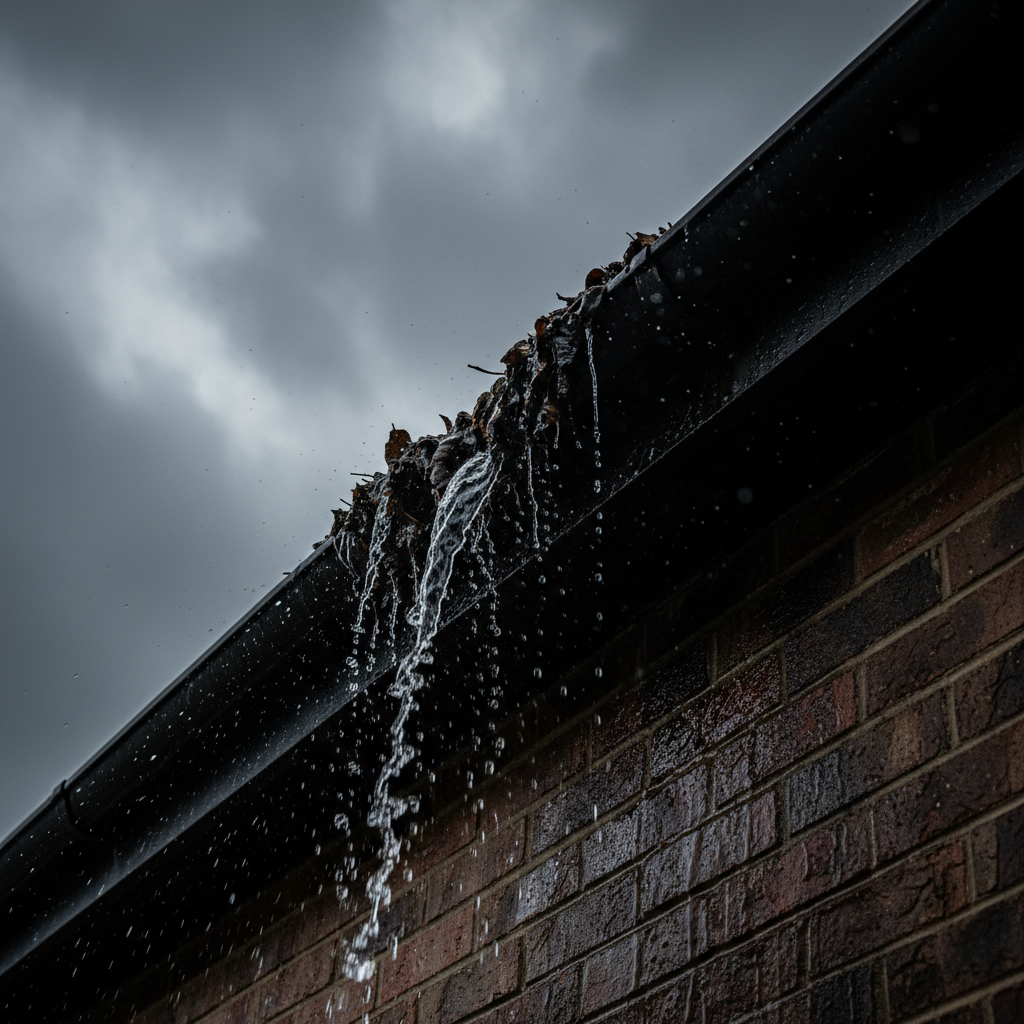
A functioning gutter system operates on a simple principle of controlled redirection. Rainwater should flow from the roof into the trough and travel horizontally toward the downpipe outlets, eventually dispersing safely into the ground drainage or a soakaway. When this process is interrupted, one of the most immediate and visible signs of blocked gutters is the "waterfall effect."
This phenomenon occurs when organic debris, such as accumulated silt or clumps of moss, creates a physical dam within the trough. During typical British downpours, the volume of water quickly exceeds the capacity of these restricted channels. Instead of moving toward the downpipe, the water pools and then cascades over the front edge of the guttering. In some cases, it may even overflow behind the gutter, directly onto the fascia boards and brickwork.
If you notice sheets of water falling from your roofline rather than a steady stream exiting the base of your downpipe, it indicates a complete obstruction. This breach in the drainage system bypasses the protection your gutters are designed to provide, leaving your property’s perimeter vulnerable to the erosive force of concentrated rainwater hitting the ground near your foundations. Spotting this during a heavy storm is a clear signal that the system requires immediate attention to restore its functionality.
Sign 2: Sagging Gutters or Pulling Away from the Fascia
Beyond the visual cues of overflowing water, the physical alignment of your guttering system often reveals the severity of a blockage. A standard uPVC or metal gutter is engineered to support the weight of flowing water, which is relatively light and temporary. However, when debris accumulates, it creates a dense, heavy sludge composed of wet silt, decomposed leaves, and saturated moss. During a rainy period, this mass absorbs water like a sponge, significantly increasing the load on the supporting brackets and fixings.
When you notice a section of guttering dipping in the middle or visibly pulling away from the roofline, it is a definitive indicator of a long term obstruction. This sagging occurs because the weight of the debris has exceeded the load-bearing capacity of the system. In many Hampshire homes, we see the primary fixings begin to fail or the screws pull out of the timber fascia boards entirely under the constant strain of these heavy dams.
This structural strain poses a secondary risk to your property's exterior. When a gutter pulls away, it creates a gap where water and damp organic matter become trapped directly against the fascia. Because this area rarely receives airflow to dry out, the timber is prone to accelerated rot and fungal growth. Ignoring these structural signs of blocked gutters can turn a simple cleaning task into a costly repair project involving the replacement of entire fascia runs and the realignment of the drainage system. Ensuring this weight is removed through professional gutter clearing services is the only way to prevent permanent deformation of the troughs and protect the integrity of your roofline.
Sign 3: Growing Plants and Visible Debris
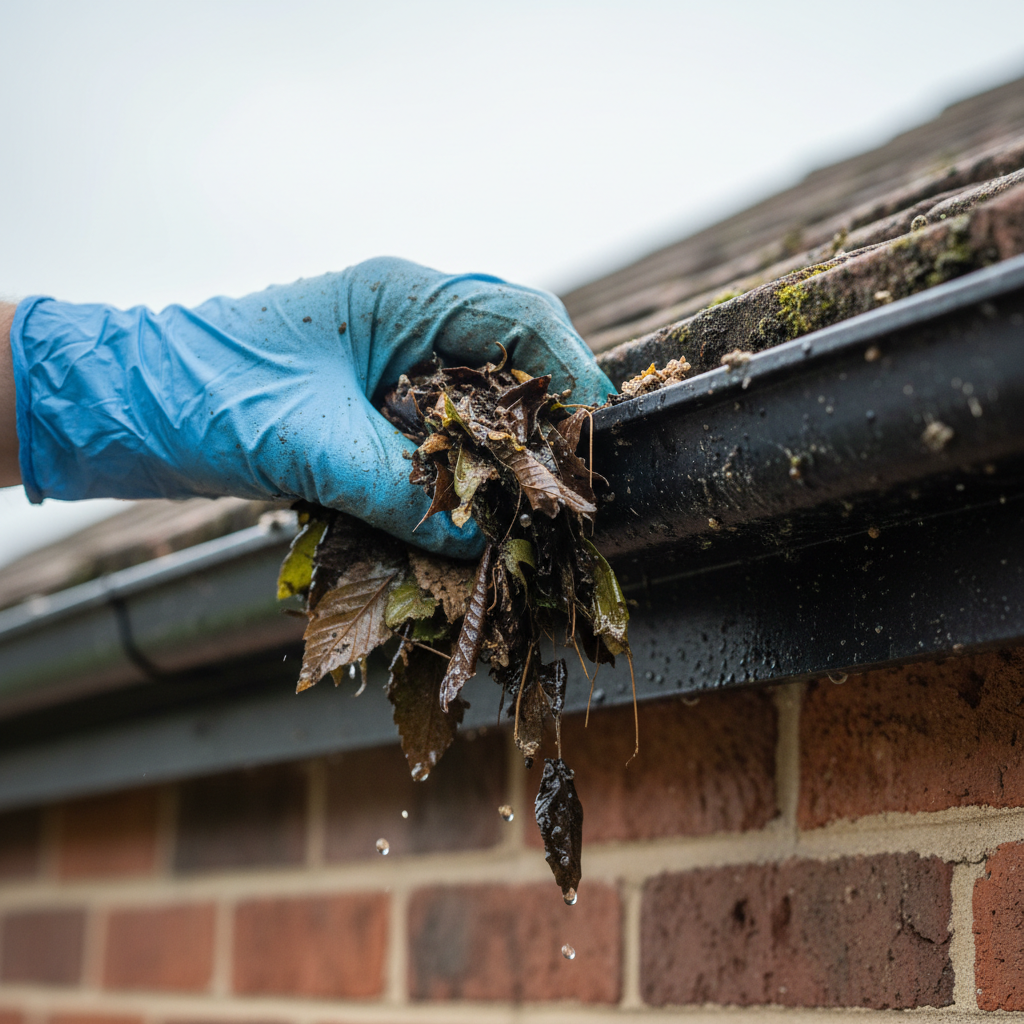
While structural sagging indicates weight, the appearance of vegetation suggests a biological ecosystem has taken hold in your drainage system. We often refer to this as a gutter garden. Over time, decaying organic matter like leaves and twigs breaks down into a nutrient-rich compost. When windblown seeds or bird droppings land in this moist environment, they find the perfect conditions to germinate. It is common to see grass, weeds, and even small sycamore or ash saplings flourishing several metres above the ground.
In our region, the prevalence of moss on traditional Hampshire clay tiles plays a significant role in this process. As moss naturally detaches from the roof, it rolls into the troughs and acts as a biological foundation. This moss retains water even during dry spells, providing a constant reservoir for new growth. Because moss is dense and fibrous, it effectively traps other debris in place, preventing it from being washed toward the downpipe.
If you can clearly see green shoots, tufts of grass, or small leaves peering over the edge of the trough from ground level, the signs of blocked gutters are undeniable. These plants have developed root systems that weave through the silt and debris, creating a dense mat that is incredibly difficult for water to penetrate. By this stage, the risk of a total system failure is high, and professional gutter clearing services are required to remove the rooted mass. To prevent a recurring garden, homeowners should also consider effective roof cleaning to remove moss, addressing the source of the foundation material before it migrates back into the system.
Sign 4: Staining and Damp Patches on Exterior Walls
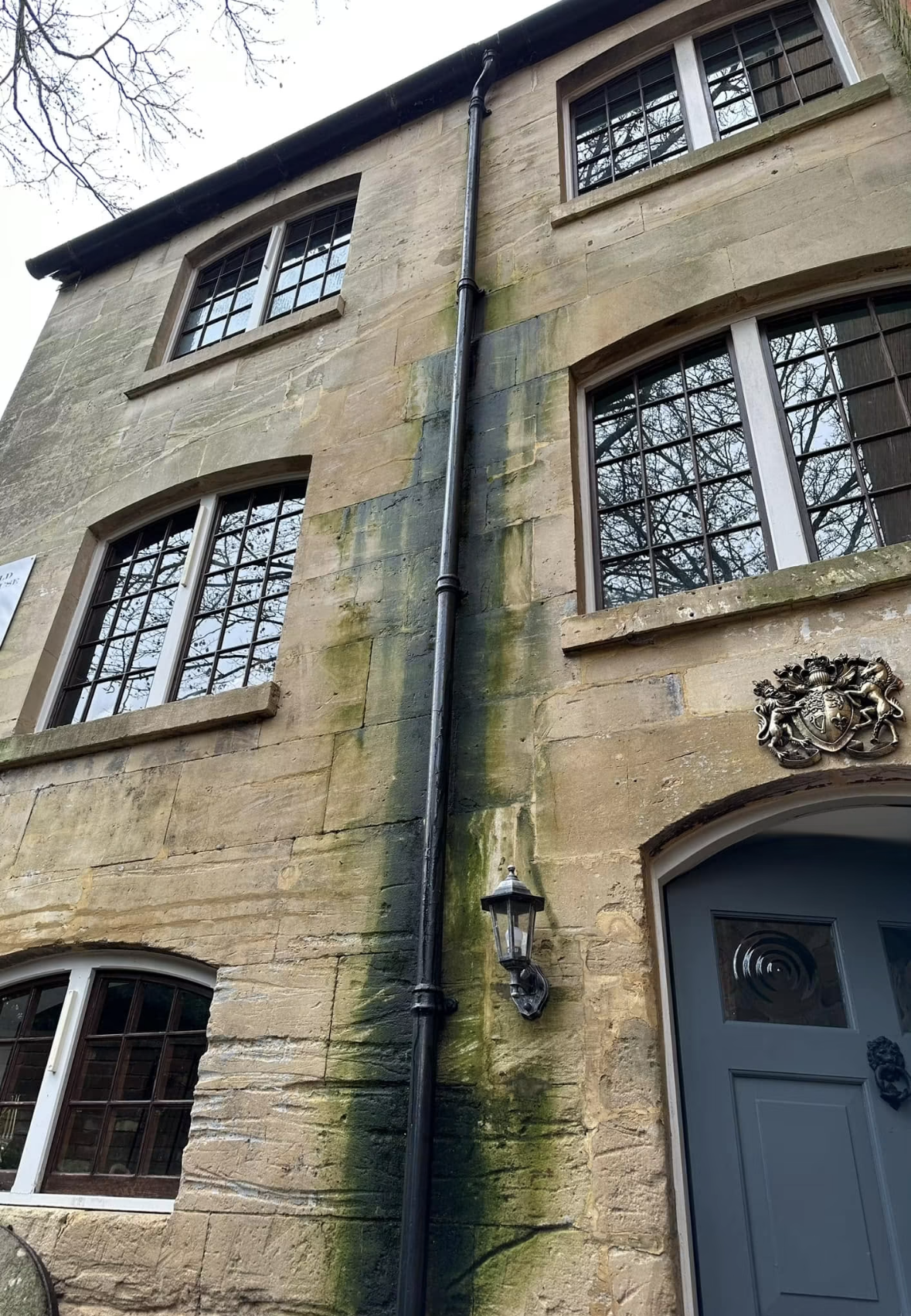
The persistent overflow described in previous sections eventually leaves a permanent mark on your property’s facade. When water regularly breaches the gutter line, it does not just fall to the ground; it often clings to the exterior masonry. Over weeks and months, this constant saturation creates vertical dark streaks or "tiger stripes" down the brickwork. In the damp climate of the South East, these moisture rich tracks quickly become a breeding ground for green algae and lichen, which further traps moisture against the wall surface.
This is more than a cosmetic issue. Many homes in Hampshire and Surrey feature porous brickwork or older lime mortar that absorbs this external moisture readily. Once the brick reaches its saturation point, the water begins to move inward through a process known as penetrating damp. Homeowners often first notice this as a musty smell, peeling wallpaper, or dark patches on internal plasterwork. By the time these signs of blocked gutters manifest inside the house, the cost of rectification escalates from a simple professional gutter clearing services visit to expensive damp proofing and interior redecoration. Addressing external drainage is the most effective way to protect your building’s structural envelope and avoid the significant financial burden of internal water damage.
Sign 5: Pests and Unwanted Visitors
A secondary but equally disruptive indicator of drainage failure is the sudden presence of local wildlife around your roofline. Stagnant water trapped by debris creates an ideal breeding ground for insects, particularly mosquitoes and gnats, which thrive in the still, nutrient rich pools found in clogged troughs. Furthermore, the combination of twigs, dried moss, and leaves provides ready made nesting material for birds. While a nest might seem harmless, it acts as a permanent dam that completely halts water flow.
These issues often migrate from the exterior to the interior. Decomposing organic matter attracts wood boring beetles and provides a foundation for wasps to build nests in sheltered spots. Because gutters sit directly against the eaves, these pests can easily find gaps to enter your loft space, leading to problematic infestations that require professional pest control. Recognizing these biological signs of blocked gutters is essential for maintaining a hygienic home. If you notice increased activity from wasps or birds around your gutters, it is often a symptom of underlying debris that requires professional gutter clearing services to resolve.
What to Do When You Spot These Signs
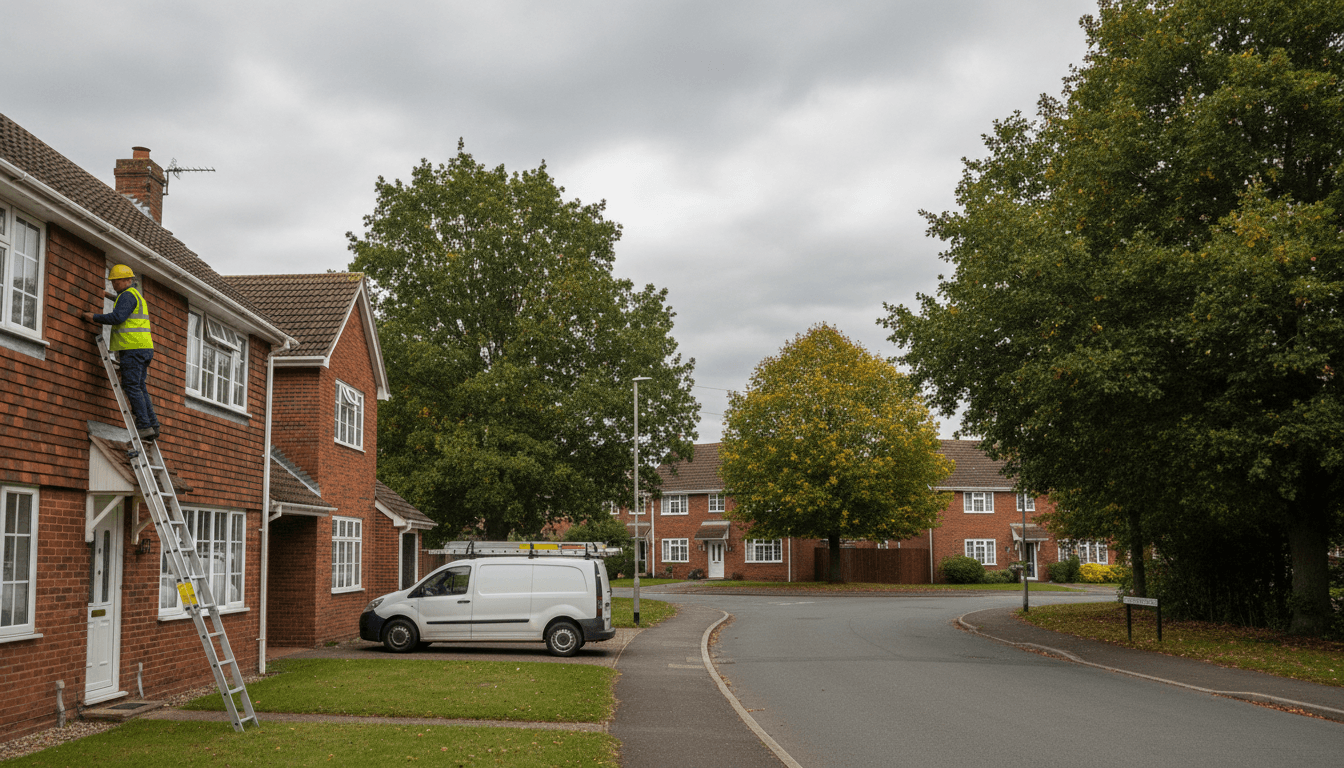
Identifying the signs of blocked gutters is the first step; the second is deciding how to rectify the issue safely. Many homeowners consider a DIY approach using a standard ladder and a bucket. However, working at height remains the primary cause of serious household accidents across the UK. Balancing on a ladder while reaching into a trough is inherently unstable, especially when dealing with the heavy, wet debris common in Hampshire homes.
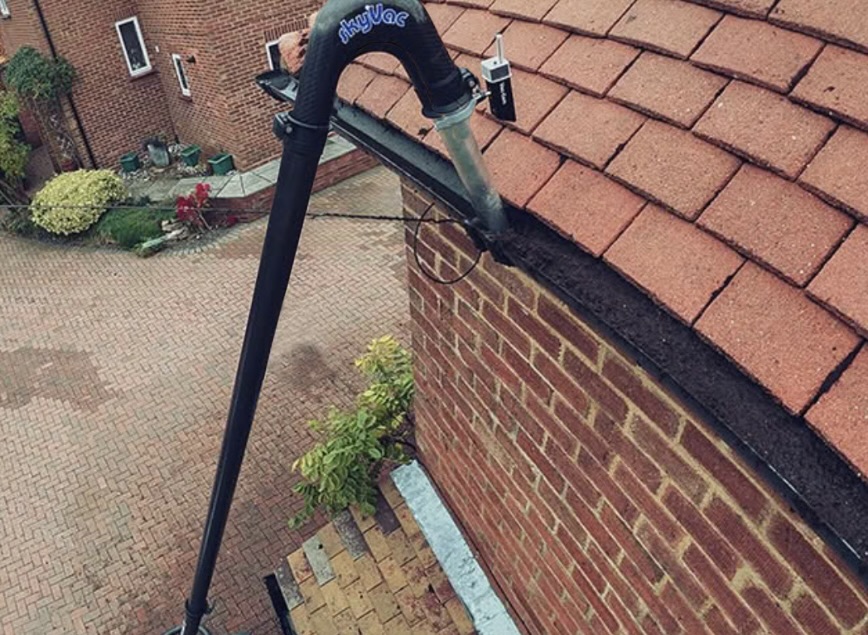
Professional gutter clearing services utilize specialized industrial technology to eliminate these risks. We use high powered gutter vacuums paired with carbon fibre telescopic poles, allowing for precision cleaning from the safety of the ground. These vacuums generate significant suction, lifting heavy silt and established root systems that manual scooping often leaves behind. This method is not only safer but also cleaner, as the debris is contained within the vacuum system rather than being dropped onto your driveway or flower beds.
A critical advantage of professional equipment is its ability to clear internal downpipe blockages. While a homeowner might clear the horizontal trough, clogs frequently lurk in the swan neck or elbow joints of the downpipe where they are impossible to see from a ladder. If these vertical obstructions are ignored, the system will fail again during the next heavy downpour. Furthermore, a professional technician can assess the overall condition of the roofline and determine if effective roof cleaning to remove moss is required to prevent immediate re-soiling. Opting for a professional service ensures the entire drainage network is cleared and tested, protecting your property’s structural integrity without the physical risk of ladder work.